
What Kills Carpenter Bees: Professional Solutions
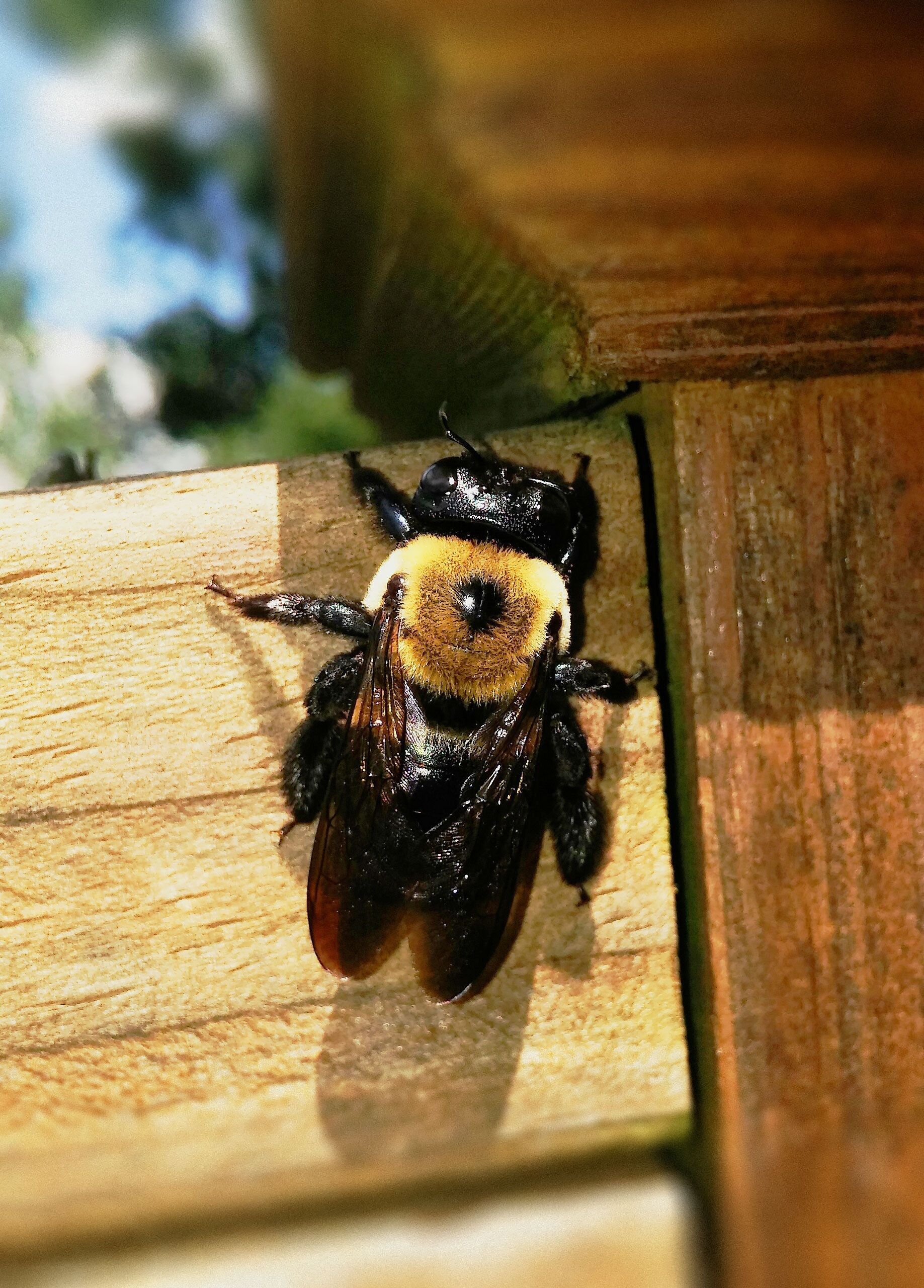
What kills carpenter bees depends on where they are nesting and how extensive the infestation has become. Insecticidal dusts, residual sprays, and foaming treatments can target active galleries, while sealing treated holes and protecting exposed wood help prevent repeat nesting. Natural repellents and traps may reduce activity, but they are less reliable for established infestations.
Key Takeaways
- Eastern carpenter bees (Xylocopa virginica) are solitary bees that excavate nesting galleries in wood rather than eating the wood.
- Round entry holes, wood shavings, and repeated bee activity around untreated or weathered wood are common signs of carpenter bee activity.
- Insecticidal dusts, residual sprays, and foaming treatments may be used to treat active galleries, depending on the product label and nesting conditions.
- Natural repellents and physical controls may reduce activity but are generally less reliable for established infestations with multiple active galleries.
- Sealing treated nesting holes and protecting exposed wood are important parts of long-term carpenter bee prevention.
- Professional treatment is particularly useful when infestations involve multiple galleries, structural areas, difficult access, or repeated seasonal activity.
Understanding Carpenter Bees: Identification and Behavior
Carpenter bees are large solitary bees, with the Eastern carpenter bee (Xylocopa virginica) being a common species in the eastern United States. They can resemble bumblebees, but their abdomen is typically smooth, shiny, and largely hairless. Large carpenter bees are generally about 12 to 25 mm long. Male carpenter bees cannot sting, while females can sting but are generally not aggressive unless handled or their nesting area is seriously disturbed.
Unlike termites, carpenter bees do not eat wood. They bore circular holes through soft, unpainted, or weathered wood to lay eggs and build galleries. The wood provides a protected nesting site rather than serving as a food source. Repeated nesting can contribute to wood damage over time, particularly when galleries are reused or additional tunnels are created.
Carpenter bees commonly target decks, fences, eaves, railings, roof trim, and other exposed wooden structures. In Mantua Township and throughout South Jersey, these conditions can make exterior wood particularly vulnerable to seasonal carpenter bee activity.
Signs of Carpenter Bee Infestation in Your Property
The clearest sign is a round entry hole about 1/2 inch wide in untreated or weathered wood. You may also see coarse wood shavings, or frass, below the opening. Yellow pollen stains and bee excrement near the entrance can provide additional clues.
Look for these signs around exterior wood:
- Round, smooth entry holes approximately 1/2 inch wide
- Coarse wood shavings or frass below the entrance
- Yellow pollen or staining around the hole
- Bees entering and leaving the same openings
- Activity around decks, posts, beams, rafters, and other wooden structures
- Multiple holes appearing across the same structure
Active infestations may show bees repeatedly entering and leaving holes during spring and summer. Although the visible opening may appear small, the gallery can extend deeper into the wood. Treating visible bee activity alone may therefore not address the nesting site. Repeated nesting can contribute to wood damage over time, making inspection important when new holes continue to appear.
Where Carpenter Bees Target Your Home
Carpenter bees generally target unpainted, weathered, or exposed wood because these surfaces are easier to excavate. Common areas include:
- Doors and windowsills
- Roof eaves and exterior trim
- Railings and decks
- Untreated poles and fences
- Wooden lawn furniture
- Other exposed or weathered wooden structures
Once a female establishes a gallery, the same area may remain attractive for future nesting activity. For this reason, exterior wood should be inspected before and during the spring nesting period, especially on properties with a history of carpenter bees.
What Kills Carpenter Bees?
Carpenter bee control generally focuses on treating active nesting galleries rather than simply killing bees flying around the property. The appropriate treatment depends on the gallery location, wood condition, accessibility, and extent of the infestation.
Common treatment approaches include:
- Insecticidal dusts applied to active galleries
- Residual insecticide sprays applied according to the product label
- Foaming treatments for deeper or difficult-to-reach galleries
- Sealing treated holes after activity has stopped
- Protecting exposed wood to reduce future nesting
No single treatment is appropriate for every carpenter bee infestation because gallery depth, wood condition, accessibility, and activity levels can vary. The goal is to address active nesting while also reducing the conditions that allow carpenter bees to return.
Professional-Grade Insecticides That Kill Carpenter Bees
Insecticidal dusts and residual sprays may be used for active carpenter bee galleries when permitted by the product label. Dust can be introduced into the gallery through the entrance, while residual treatments can provide continued control on appropriate surfaces when applied according to the label.
Treatment should account for:
- Location and depth of the gallery
- Condition of the affected wood
- Accessibility of the nesting area
- Number of active holes
- Whether the treatment is intended for direct gallery treatment or surface protection
Always follow the current pesticide label, including permitted pests, application sites, application rates, personal protective equipment, and other safety requirements. An insecticide should not be selected solely because it is described as a professional-grade product.
Foaming Insecticides for Deep Gallery Treatment
Foaming insecticides can be useful when carpenter bee galleries extend deeper into wood or are difficult to reach with a surface application. The expanding formulation can help reach portions of a narrow gallery that may not be treated effectively with a surface spray alone.
Foam is therefore most relevant when the visible entrance does not provide a clear indication of how far the nesting gallery extends. The product label should determine whether a particular foam is approved for carpenter bees, where it can be applied, and how it should be used.
Preventive Insecticide Applications
Preventive insecticide applications are intended to reduce future carpenter bee activity on vulnerable wood rather than eliminate an established gallery by themselves. Timing can be important because appropriately labeled preventive treatments may help reduce new nesting activity on vulnerable wood.
In South Jersey, seasonal inspection can be especially useful on properties with recurring carpenter bee activity. Preventive treatment works best as part of a broader approach that includes wood maintenance, treatment of active galleries, and sealing inactive holes.
Do Natural Carpenter Bee Remedies Work?
Natural remedies may help discourage carpenter bees from using selected areas, but they should not be presented as dependable methods for eliminating an established infestation. Homeowners may encounter recommendations involving vinegar, citrus oil, almond oil, peppermint, tea tree, lavender, and eucalyptus oils.
Evidence for these approaches as reliable carpenter bee control methods is limited, and their effects may be temporary. They may be considered when activity is light or when a homeowner prefers a lower-chemical approach, but they generally require more frequent application and may not address established galleries.
Essential Oil Treatments for Carpenter Bees
Peppermint, tea tree, and eucalyptus oils are commonly promoted as natural carpenter bee deterrents. These products may make treated areas less attractive to bees, but they should be considered repellents rather than reliable methods for eliminating an established nesting site.
If essential oils are used, follow the product's intended-use instructions and avoid treating homemade mixtures as equivalent to labeled pest control products. Natural repellents generally do not provide the same residual control as properly applied insecticides.
DIY Vinegar and Garlic Solutions
Vinegar and garlic mixtures are sometimes used as homemade carpenter bee repellents. They may make an area less attractive to bees, but they are not reliable treatments for established galleries.
These approaches are most applicable when activity is limited and the goal is to discourage bees from using a particular area. If carpenter bees are repeatedly entering multiple holes or galleries extend deep into structural wood, homemade repellents may reduce visible activity without addressing the underlying nesting site.
Do Carpenter Bee Traps Work?
Carpenter bee traps can reduce the number of adult bees around a property, but they do not treat the galleries already present in the wood. Carpenter bee traps typically use a wooden block with entrance holes connected to a collection container. Bees enter the opening and are directed into the container, where they cannot easily escape.
Traps may be useful as a supplemental control method when activity is concentrated around a specific area. However, they should not replace inspection and treatment of active nesting galleries when carpenter bees are repeatedly using structural wood.
Carpenter Bee Hotels and Relocation
A carpenter bee hotel provides an alternative nesting site and may appeal to homeowners who want a pollinator-conscious approach. Unlike a trap, a bee hotel is intended to provide nesting habitat rather than kill the bees.
However, relocation-style approaches have limitations. Alternative nesting structures do not repair or protect wood already being used for nesting, so active structural infestations may still require treatment, sealing, and wood protection.
Professional Treatment Process for Carpenter Bee Elimination
Professional carpenter bee treatment starts with inspection. Technicians inspect decks, trim, soffits, fences, eaves, rafters, and other exterior wood structures to locate active galleries, nesting holes, and vulnerable surfaces. This step helps determine whether the visible holes represent active nesting and how accessible the galleries are.
The treatment process may include:
- Inspect the property and identify active carpenter bee galleries.
- Assess the condition and accessibility of the affected wood.
- Apply an appropriate treatment to active holes according to the product label.
- Allow sufficient time for the treatment to work before sealing active entrances.
- Seal inactive holes with an appropriate wood filler, caulk, or other durable material.
- Protect vulnerable wood surfaces against future nesting.
- Monitor for recurring seasonal activity when the property has a history of carpenter bees.
Sealing holes too early can interfere with treatment because live bees may still be inside the gallery. Once activity has stopped, sealing the entrance can help prevent future nesting and protect the surrounding wood.
Long-Term Prevention: Protecting Wood From Carpenter Bees
Long-term prevention focuses on making vulnerable wood less attractive and less accessible for nesting. Carpenter bees prefer unpainted and weathered wood, so maintaining exterior surfaces can reduce available nesting sites.
Focus on these preventive measures:
- Paint or seal exposed wood. Finished surfaces are generally less attractive than bare, weathered wood.
- Maintain decks, fences, eaves, trim, and railings. Repair deteriorated or weathered sections before they become attractive nesting sites.
- Seal treated carpenter bee holes. Closing inactive entrances helps prevent future reuse.
- Use wire screening or metal flashing where appropriate. These materials can protect rough or vulnerable areas.
- Inspect vulnerable wood before spring activity. Early detection can help identify new nesting before galleries become established.
Wood-preservation treatments may also be considered for appropriate unfinished wood surfaces, but their permitted uses, target pests, and application requirements should always be confirmed on the current product label. Prevention is most effective when wood maintenance is combined with inspection and treatment of active nesting sites.
When to Call Professional Pest Control for Carpenter Bees
Professional pest control is appropriate when the infestation is difficult to access, continues despite DIY treatment, or involves multiple active galleries. Professional help is also useful when treatment requires elevated work, deeper gallery treatment, or pesticide application methods that a homeowner is not comfortable handling.
Consider professional treatment when:
- Multiple carpenter bee holes are present.
- New holes continue appearing after DIY treatment.
- Galleries are located in difficult-to-reach areas.
- The infestation involves roof eaves, upper siding, rafters, or other elevated structures.
- Visible wood damage is becoming extensive.
- The appropriate treatment method is unclear.
Carpenter bee galleries can extend beyond the visible entrance, making some infestations difficult to resolve with surface treatment alone. A professional inspection can determine whether active galleries require treatment and whether the affected wood also needs sealing or additional protection.
If carpenter bees are repeatedly nesting around your property, professional
carpenter bee control in Mantua Township and South Jersey can help identify active nesting sites and determine an appropriate treatment plan.
Domination Extermination serves Mantua, Sewell, Sicklerville, Maple Shade, Glassboro, Pitman, and surrounding South Jersey communities.
Carpenter Bee Biology: Why They're Hard to Control
Carpenter bees are hard to control because they use wood as a protected nesting site rather than consuming it. They excavate galleries where females lay eggs and provide food for developing young. Because much of the nesting activity takes place inside the wood, the visible bee activity may not reveal the full extent of the nesting site.
Their development includes egg, larval, pupal, and adult stages, and the timing varies with environmental conditions. In South Jersey, carpenter bees are seasonally active, with adults typically becoming noticeable during the warmer months.
Because carpenter bees may use existing galleries and return to the same areas in subsequent seasons, treating visible adult bees without addressing the nesting site may not prevent recurring activity. Carpenter bees are solitary rather than colony-forming insects, so multiple holes on the same property can represent multiple individual nesting galleries.
Large vs. Small Carpenter Bees
Large carpenter bees belong to the Xylocopa genus and can measure approximately 12 to 25 mm long. They may appear black, greenish-black, metallic blue, or purplish depending on the species.
Small carpenter bees belong to the Ceratina genus and are generally less than 8 mm long. They are often dark and may have a metallic appearance. Unlike large carpenter bees, which can excavate structural wood, small carpenter bees commonly nest in small twigs and stems.
This distinction matters because not every insect identified as a "carpenter bee" is responsible for holes in decks, fences, eaves, or structural wood.
Frequently Asked Questions About Killing Carpenter Bees
Are carpenter bees dangerous to people?
They're usually not aggressive, and male carpenter bees cannot sting. Female carpenter bees can sting but generally do so when handled or seriously disturbed. The larger concern around a property is usually repeated nesting and wood damage rather than aggressive attacks on people.
What is the best time of day to remove a wasp nest?
For active carpenter bee galleries, treatment should focus on the nesting site rather than only the visible adult bees. Insecticidal dusts can be introduced into appropriate galleries, while foaming products may be useful where galleries extend deeper into the wood. After treatment, holes should remain open until activity has stopped and then be sealed to help prevent future nesting.
How long does it take to kill carpenter bees?
Treatment timing varies depending on the product, application method, and location of the nesting galleries. Some treatments may begin affecting exposed bees relatively quickly, while deeper gallery treatments may take longer to reduce activity. Natural repellents may require repeated application and are less reliable for established galleries.
Can carpenter bees be relocated instead of killed?
Yes, in limited situations. A carpenter bee hotel can provide an alternative nesting location for homeowners who prefer a pollinator-conscious approach. However, a bee hotel does not treat or repair an active infestation in structural wood. Recurring or extensive infestations may require treatment and prevention measures.
How much does carpenter bee treatment cost?
Cost depends on the severity of the infestation, number of active galleries, accessibility, treatment method, and amount of wood protection or repair required. Light infestations generally require less work than widespread activity involving multiple structures or difficult access. An inspection-based estimate is the best way to determine the appropriate treatment plan.
About the Author
Written by Domenic Anastasia, Founder and Lead Technician at Domination Extermination. With more than a decade of hands-on pest control experience across South Jersey, Domenic brings practical field knowledge of carpenter bee behavior, nesting galleries, treatment, and prevention to this guide.
Last updated: August 2026