
Domination Extermination
Bee and Wasp Control in Mantua, NJ
Bee and wasp control in Mantua, NJ,
inspects, treats, and eliminates active nests using EPA-registered insecticides selected by species and nesting location.
Domination Extermination resolves 300+ stinging insect infestations annually across Gloucester County, with same-day service and a 30-day re-treatment guarantee.
Stinging Insect Biology & Risk
Stinging insect infestations in Mantua, NJ range from small paper wasp nests to large underground yellowjacket colonies, and the correct treatment method depends on identifying the species first. Each insect nests differently, grows to a different colony size, and carries a different level of sting risk to homeowners.
| Species | Nesting Habit | Typical Colony Size | Identifying Features | Primary Risk |
|---|---|---|---|---|
| Yellowjacket | Ground burrows or wall voids | Approximately 2,000 to 5,000 workers by late summer (typical for NJ climate) | Black and yellow banded body, smooth and non-hairy, only slightly larger than a bee | Aggressive, multi-sting defense; nests often hidden underground or inside walls |
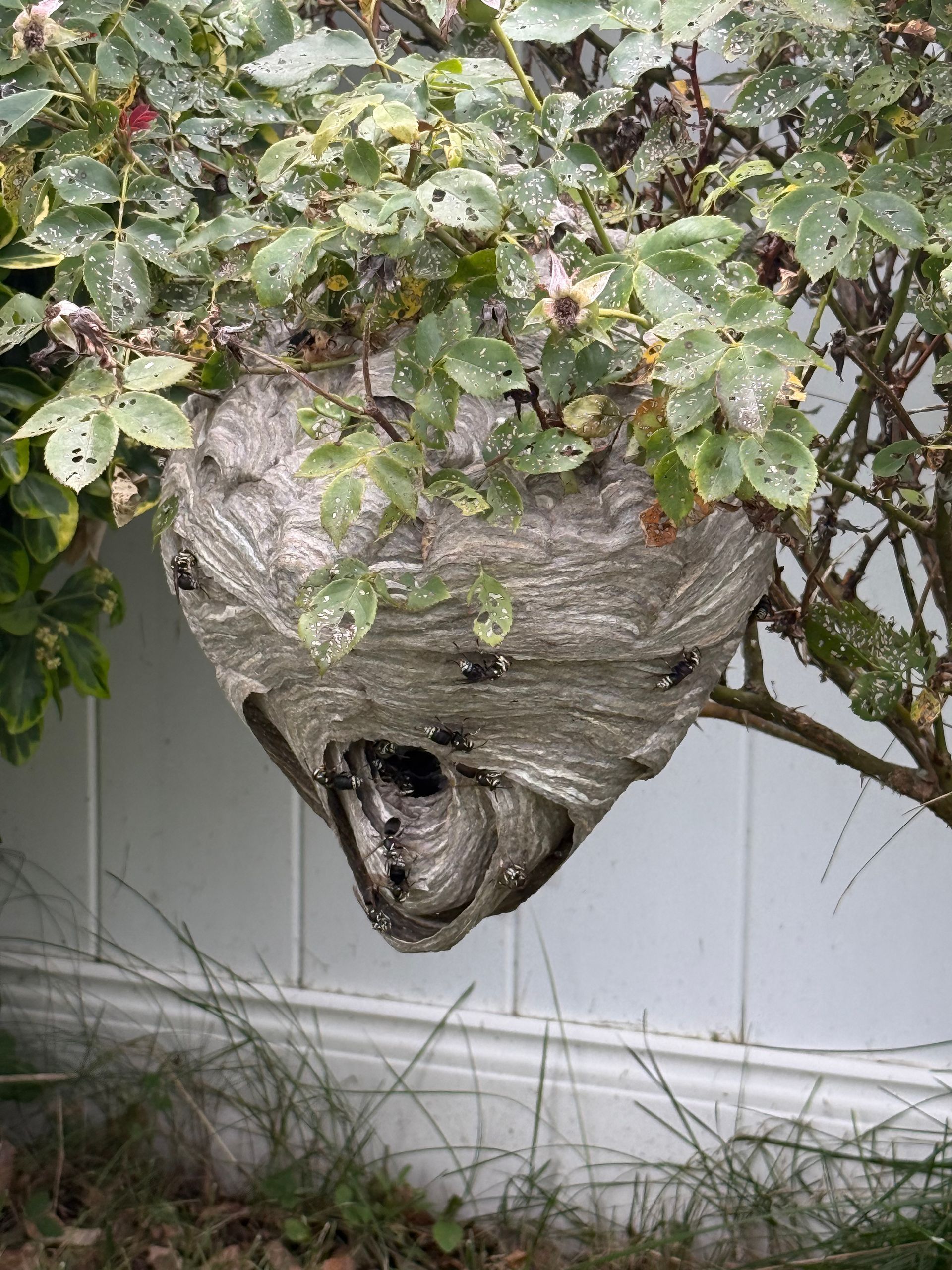
| Bald-Faced Hornet | Enclosed papery aerial nests in trees, shrubs, or eaves | Up to approximately 400 workers at peak population | Larger body than yellowjackets, often with white or pale markings | Large visible aerial nests near rooflines; multiple stings possible when disturbed |
| Paper Wasp | Open, umbrella-shaped nests under eaves, decks, or railings | Generally fewer than 100 workers | Slender body with long legs that dangle in flight, narrow elongated abdomen | Less aggressive than yellowjackets but stings when nest is disturbed |
| Carpenter Bee | Bores tunnels into untreated, exposed wood | Solitary; does not form a colony | Large, robust body; shiny black abdomen (distinguishes from fuzzy bumblebees) | Repeated tunneling causes structural wood damage over multiple seasons |
Yellowjackets and hornets become most active during late summer as colonies reach peak population. Hidden nests inside wall voids or underground increase the likelihood of accidental disturbance, while exposed paper wasp nests commonly develop beneath roof eaves, decks, and railings. Carpenter bees differ from social wasps because they do not form colonies, but repeated nesting in untreated wood can result in cumulative structural damage over time.
Risk note: Colony size figures above are general entomological ranges for the Northeastern United States based on university extension and pest-reference data. Individual nest populations vary depending on environmental conditions and the time of year and are not measurements of any specific nest in Mantua.
What’s Included in Bee & Wasp Control
| Service Type | What's Included | Typical Time | Frequency |
|---|---|---|---|
| Nest inspection & ID | Inspection of eaves, soffits, wall voids, and underground nesting areas; identification of yellowjackets, hornets, and paper wasps | 30–45 min | Every visit |
| Aerial nest treatment | Direct pyrethroid application (deltamethrin or lambda-cyhalothrin); nest knockdown + bag removal | 20–40 min | As needed, based on nest type |
| Ground/void nest treatment | Pressurized dust application using carbaryl (a carbamate) or deltamethrin (a pyrethroid), selected based on nest type, injected into voids, underground entrances | 30–60 min | As needed, based on nest type |
| Residual perimeter spray | EPA-registered residual along foundation, eaves, entry points; 30–60 day barrier | 30–45 min | Included with every treatment |
Bee and wasp control targets the active nest rather than individual flying insects. Treatment methods vary according to the stinging insect species, nesting location, accessibility, and the level of activity identified during the inspection. Depending on the infestation, treatment may include direct liquid applications, dust formulations for concealed nests, or residual perimeter applications to help reduce future nesting activity.
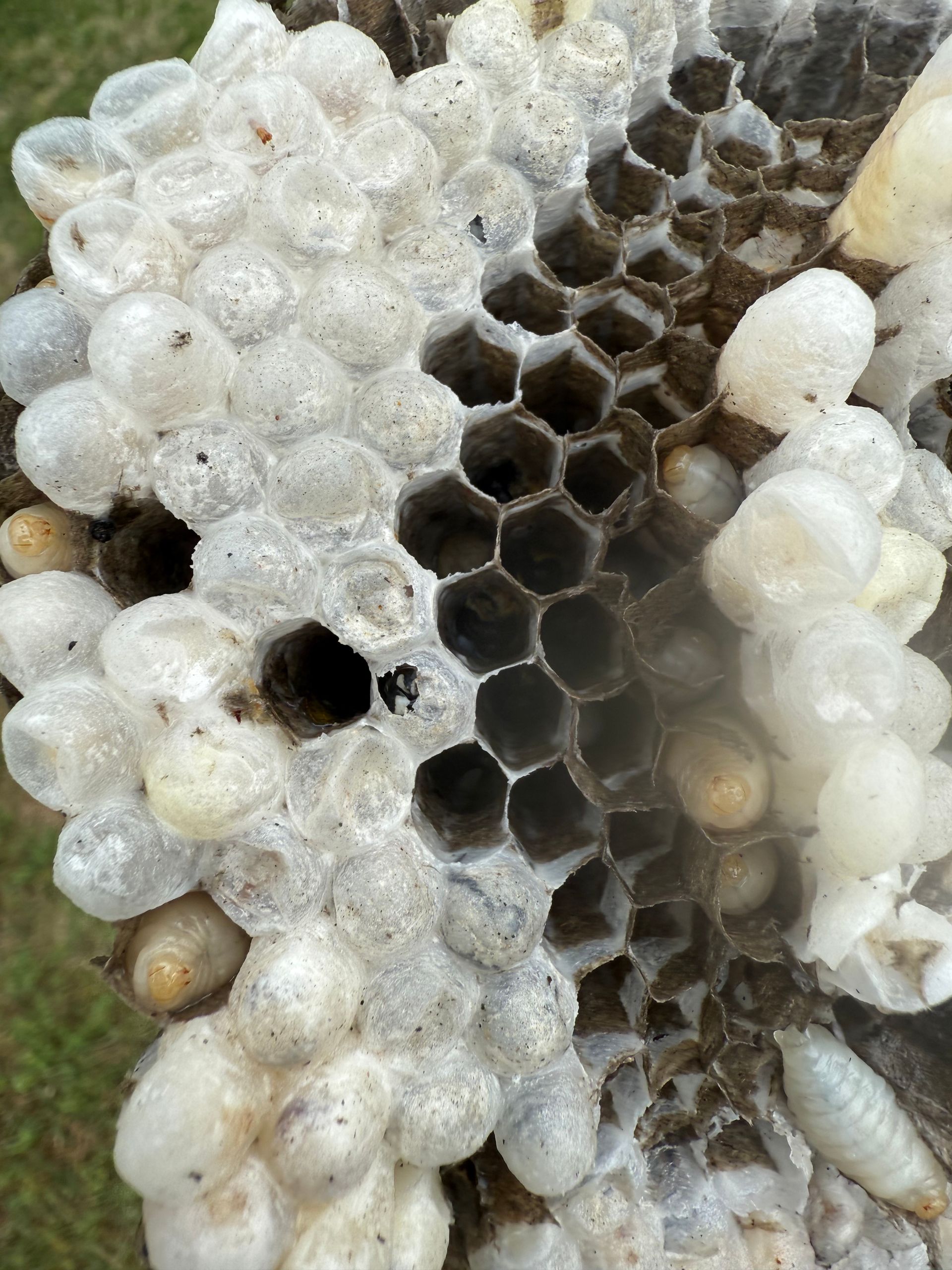
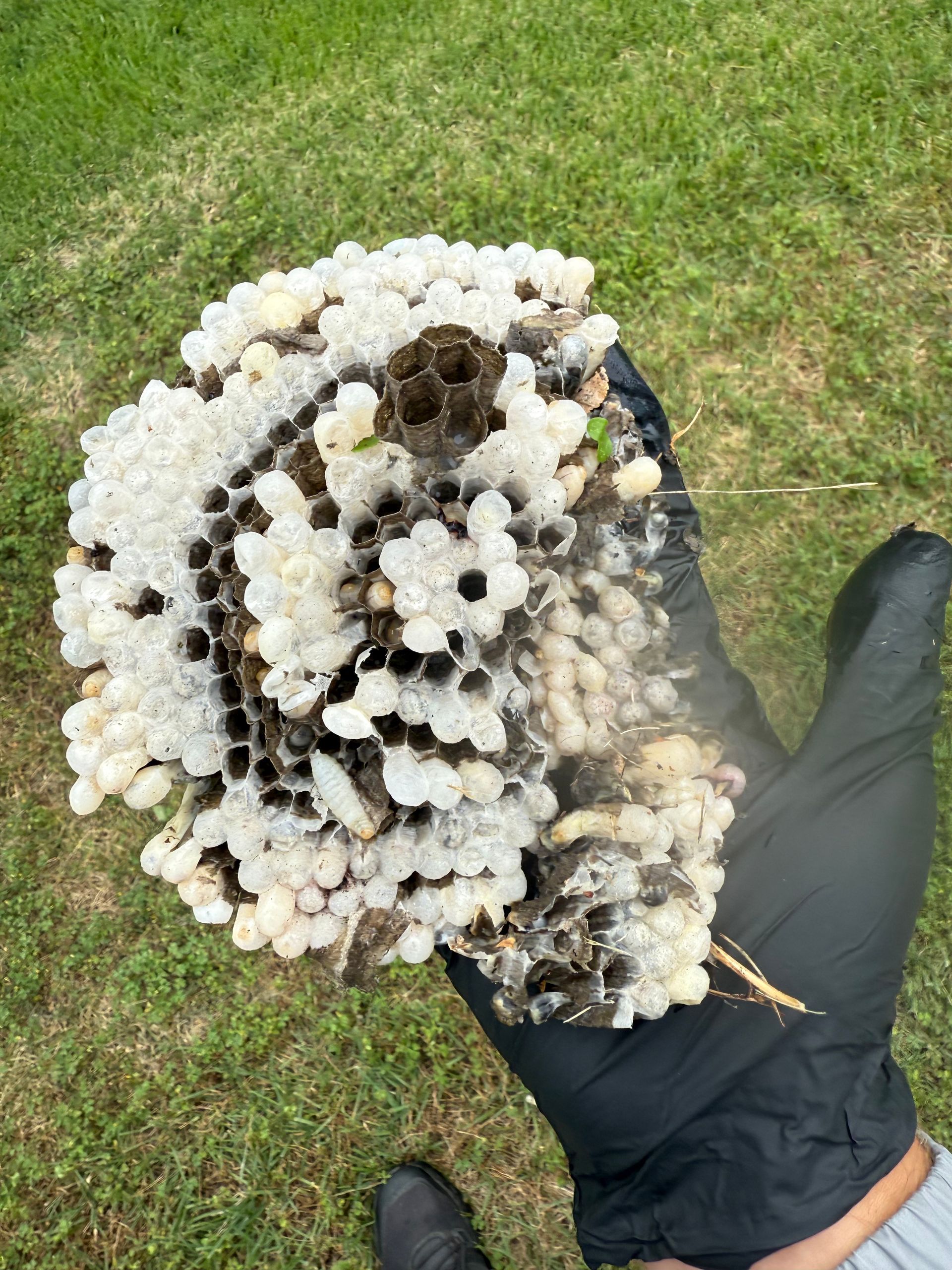
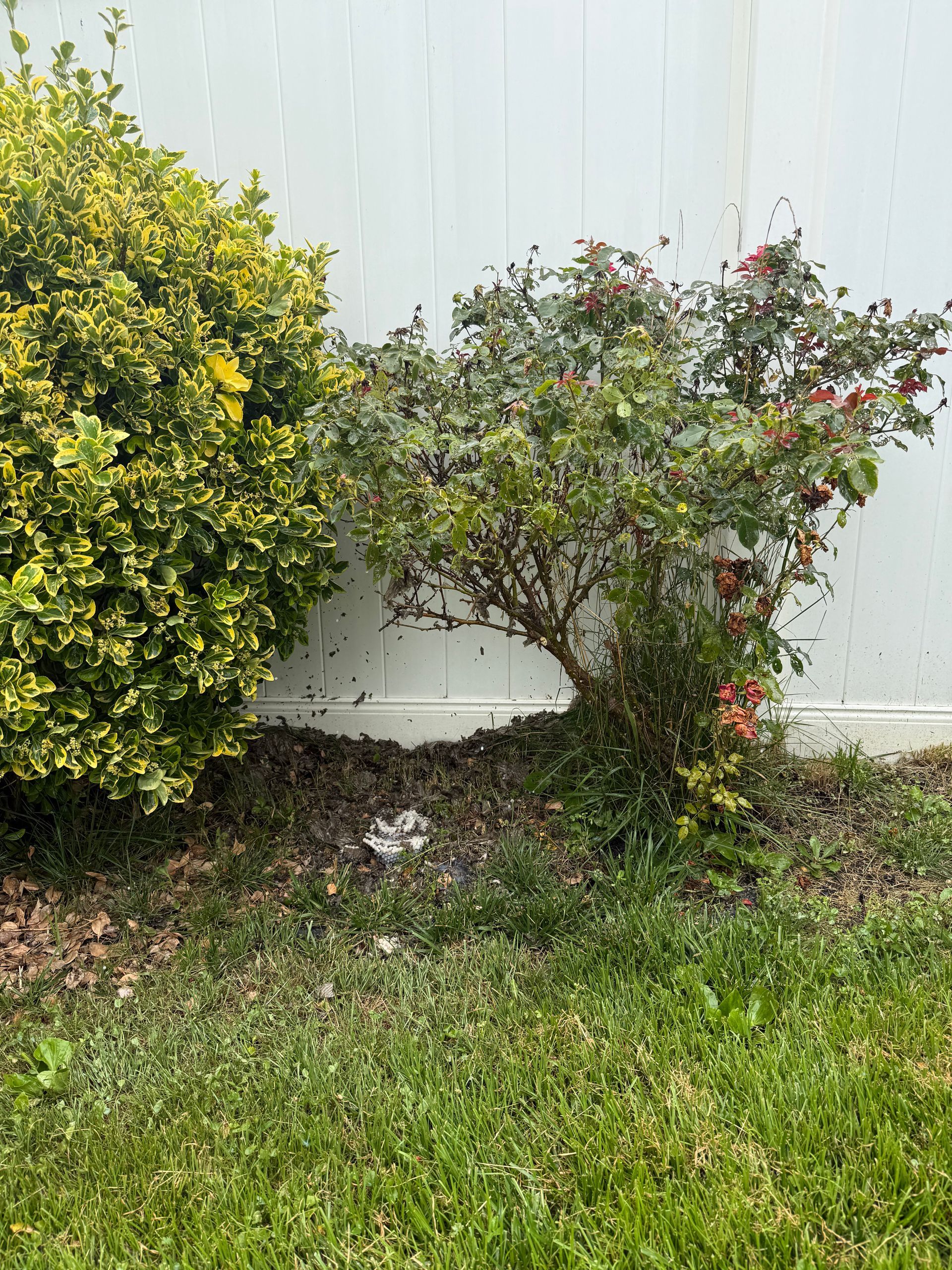
Species identification determines the most appropriate treatment approach before products are applied. Accessible nests are removed whenever practical after treatment, while concealed nests inside wall voids or underground are controlled by treating the colony at its entry point. Residual exterior applications may continue helping reduce nesting activity for approximately 30–60 days, depending on the products used and environmental conditions.
Carpenter Bees:
Related Wood-Damaging Insects
Carpenter bees (Xylocopa virginica) often appear alongside wasp activity and require separate treatment due to wood-boring behavior that damages structural surfaces across Gloucester County.
Although carpenter bees are important pollinators, they can cause recurring structural damage when females repeatedly tunnel into untreated wood to build nesting galleries. Unlike social wasps, carpenter bees do not form large colonies, but repeated nesting activity over multiple seasons can significantly increase wood damage.
Signs Of Carpenter Bee Infestation
Carpenter bee activity creates visible damage to wood surfaces and indicates active nesting tunnels.
- Round holes approximately 0.5 inch in diameter in decks, siding, or trim
- Sawdust-like frass accumulation below entry holes
- Increased bee activity around wooden structures in spring and summer
- Yellow staining near nest openings from pollen and waste deposits
- Audible buzzing or scratching sounds inside wood or wall voids
Active tunneling expands nesting galleries over time, increasing structural damage if untreated.
Carpenter Bee Life Cycle and Behavior
Carpenter bee nesting cycles repeat annually and contribute to long-term wood damage if not professionally treated.
- Spring nesting: Females bore into wood to create tunnels and lay eggs
- Development cycle: Larvae develop into adults in approximately 30–40 days
- Summer emergence: New adult bees increase activity around nest openings
- Overwintering: Adult bees remain inside tunnels and re-emerge the following spring
Because carpenter bees often reuse existing tunnels, untreated infestations frequently return year after year. Prompt treatment combined with sealing active galleries helps reduce future nesting activity.
Treatment
Carpenter bee treatment applies EPA-registered products appropriate for carpenter bee control, followed by a residual liquid application to exposed wood surfaces. Depending on the nesting location and current product labels, treatment may include residual dust or liquid formulations designed for carpenter bee activity.
Treated holes are plugged after application to prevent females from reusing existing tunnels the following spring. Whenever practical, damaged wood should also be repaired or repainted after treatment, since painted or sealed wood is generally less attractive for future nesting.
Our 4-Step Bee Control & Extermination Service Process
Bee and wasp control follows a structured 4-step process to eliminate active nests and prevent re-infestation.
01
Inspection
Domination Extermination identifies the stinging insect species, locates active nests, and assesses nesting conditions to select the safest and most effective treatment method.
02
Treatment
EPA-registered products labeled for stinging insect control are applied based on the species and nesting location, with residual exterior treatment added where appropriate.
03
Nest removal & Exclusion
Accessible nests are removed whenever it is safe and practical to do so. Entry points and nesting areas may also be sealed or addressed to help reduce the risk of future infestations.
04
Follow-up
If stinging insects return to the same treated location within 30 days, we provide a re-treatment at no additional charge. We also offer recommendations to help prevent future nesting around your home.
Signs of a Stinging Insect Infestation
These risks often become noticeable through visible activity and nesting behavior around the home..
- Visible bee or wasp activity around rooflines, eaves, and decks
- Insects entering and exiting wall voids or ground openings
- Buzzing sounds inside walls or ceilings
- Increased activity near trash, food, or outdoor areas
- Visible paper nesting material beneath eaves or attached to exterior structures
- Recurring insect activity in the same location each season
Early identification helps prevent colonies from growing larger and reduces the likelihood of accidental nest disturbance.
What to Do After a Bee or Wasp Sting
Most stings result in temporary pain, redness, and localized swelling that improve within a few hours or days.
Basic first aid includes:
- Wash the affected area with soap and water.
- Apply a cold compress for 10–20 minutes to reduce swelling.
- Use an over-the-counter antihistamine if itching develops.
- If stung by a honey bee, remove the stinger as soon as possible by scraping it away with a fingernail or the edge of a card.
Seek emergency medical care immediately if you experience difficulty breathing, swelling of the face or throat, dizziness, widespread hives, or other signs of a severe allergic reaction.
What Our Clients Are Saying
Service Areas
| Town / Area | Drive Time from Mantua | Same-Day Available? |
|---|---|---|
| Sewell, NJ | 8 min | Yes |
| Wenonah, NJ | 7 min | Yes |
| Pitman, NJ | 12 min | Yes |
| Glassboro, NJ | 15 min | Yes |
| Woodbury, NJ | 18 min | Yes |
| Mullica Hill, NJ | 20 min | Yes |
| Washington Twp, NJ | 14 min | Yes |
Our licensed technicians provide bee removal service near me throughout Mantua and surrounding Gloucester County communities. If your town is not listed above,
call Domination Extermination at 856-633-0304 to confirm availability and scheduling.
FAQs
What’s the best way to get rid of a wasp nest?
Wasp nest removal is safest when performed by a licensed pest control professional using EPA-registered products labeled for stinging insect control. Treatment methods vary depending on the species, nest location, and accessibility. Attempting DIY removal can increase the risk of multiple stings, particularly with yellowjackets and hornets.
Are stinging insects dangerous to pets and kids?
Yellowjackets, hornets, and paper wasps can sting multiple times and may become aggressive when their nests are disturbed. Children and pets are at greater risk because they may accidentally approach active nests. Professional treatment helps reduce exposure by eliminating active colonies safely.
How long does bee and wasp treatment last in Mantua, NJ?
Bee and wasp treatments eliminate active nests, while residual exterior applications may continue helping reduce nesting activity for approximately 30–60 days, depending on the product used and environmental conditions. Domination Extermination also includes a 30-day re-treatment guarantee if stinging insects return to the same treated location.
Is bee and wasp treatment safe for pets and children in Mantua, NJ?
EPA-registered products used during treatment are applied according to current product labels and NJ DEP regulations. Re-entry times vary depending on the specific product used. Your technician will provide product-specific re-entry instructions after treatment.
How much does wasp nest removal cost in Mantua, NJ?
Wasp nest removal costs in Mantua, NJ, vary based on nest size, species, location, and accessibility, with ground and wall-void nests requiring more complex treatment methods. Pricing is confirmed after inspection to ensure the correct treatment approach.
About Domination Extermination
Domination Extermination is an NJ DEP-licensed pest control company serving Mantua and Gloucester County, NJ. Founded by Domenic Anastasia with 10+ years of experience, the company resolves 300+ stinging insect infestations annually and holds a 5.0★ rating across 99 Google reviews.
Book Your Bee Or Wasp Inspection Today
Active wasp, hornet, or yellowjacket nest?
Contact Domination Extermination at
856-633-0304 - same-day nest removal available in Mantua, Glassboro, Woodbury, and surrounding Gloucester County towns. Most treatments are completed in under 60 minutes. If stinging insects return to the same location within 30 days, we provide a re-treatment at no additional charge.