How to Get Rid of Wasps Safely
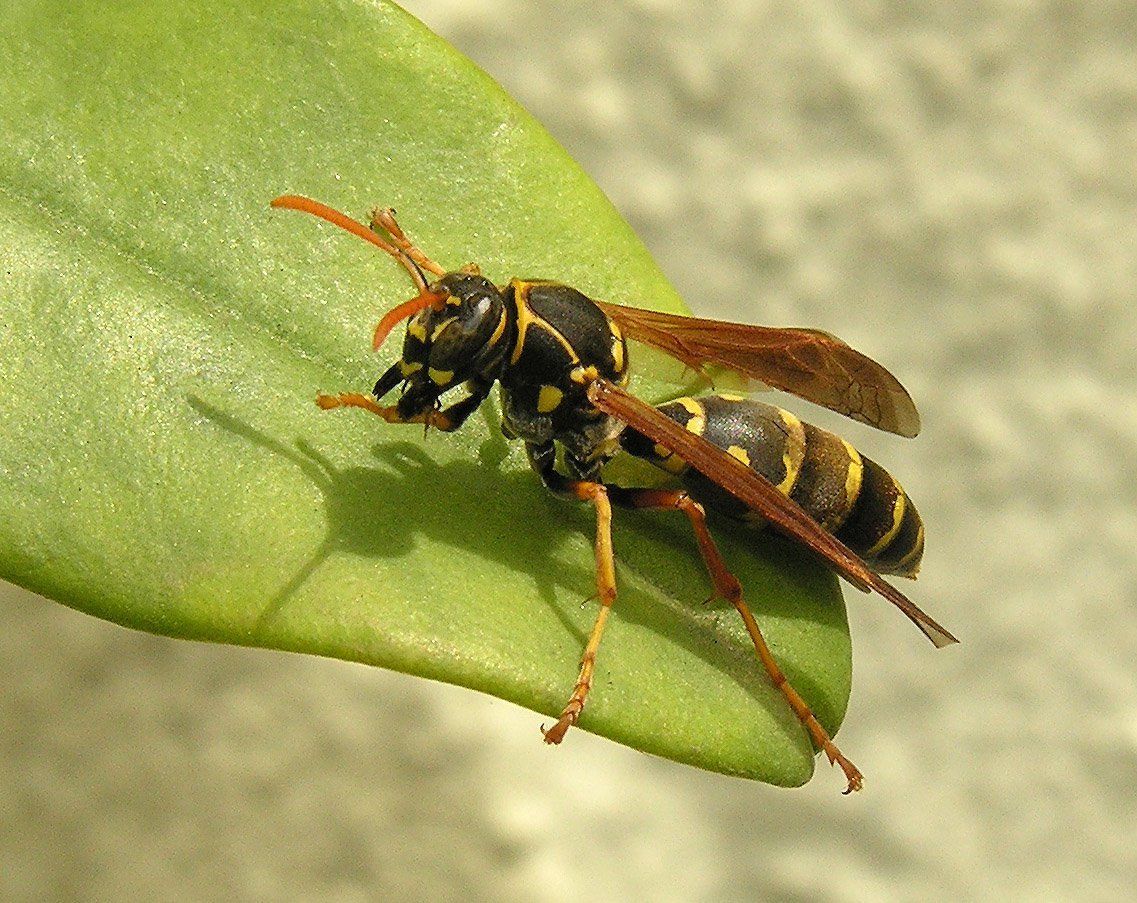
To get rid of wasps safely, identify the species, locate the nest, assess how accessible it is, and choose a treatment that matches the colony and nesting site. Small exposed nests may be manageable with label-approved products, while large, hidden, or difficult-to-reach nests are better handled by professionals.
Key Takeaways
- New Jersey wasps are most active from spring through fall, making April through September a useful period for regular nest inspections.
- Yellowjackets, paper wasps, and European hornets have different nesting habits and defensive behaviors, so identification should come before treatment.
- Small exposed nests may respond to appropriately labeled aerosol treatments, while wall voids and underground nests require a different control strategy.
- A 10 to 15 foot observation distance can help identify nest activity and flight paths before treatment is attempted.
- Large colonies, hidden nests, difficult access, and known sting allergies are strong reasons to use professional pest control.
How to Identify Wasps, Bees, and Hornets
Wasps typically have slender bodies and narrow waists, while bees are generally hairier and hornets are larger members of the wasp group. Accurate identification is an important first step because different species can have different nesting habits and defensive behaviors.
Wasps and bees can look similar at a distance, but their body shape, hair coverage, nesting behavior, and defensive behavior provide useful identification clues. Wasps generally have smooth bodies and narrow waists, while bees tend to have more visible hair and a broader body.
Hornets are wasps, not a completely separate insect group. In everyday pest-control terminology, the name "hornet" is commonly used for larger social wasps, and some insects called hornets are technically yellowjackets. For example, the bald-faced hornet is an aerial yellowjacket rather than a true hornet.
These differences matter when determining where a colony may be located and how it should be approached. Yellowjackets may nest underground or inside structural cavities, while paper wasps commonly build exposed, open-comb nests beneath eaves, porch roofs, and other protected structures. When identification is uncertain, observe the insects from a safe distance rather than disturbing the nest or blocking a potential entrance.
Common Wasp Species in South Jersey
Yellowjackets, paper wasps, and European hornets are among the social wasps that may be encountered around South Jersey homes. Although they share similar characteristics, each has different nesting habits and defensive behaviors that can affect how an active nest should be assessed.
Yellowjackets
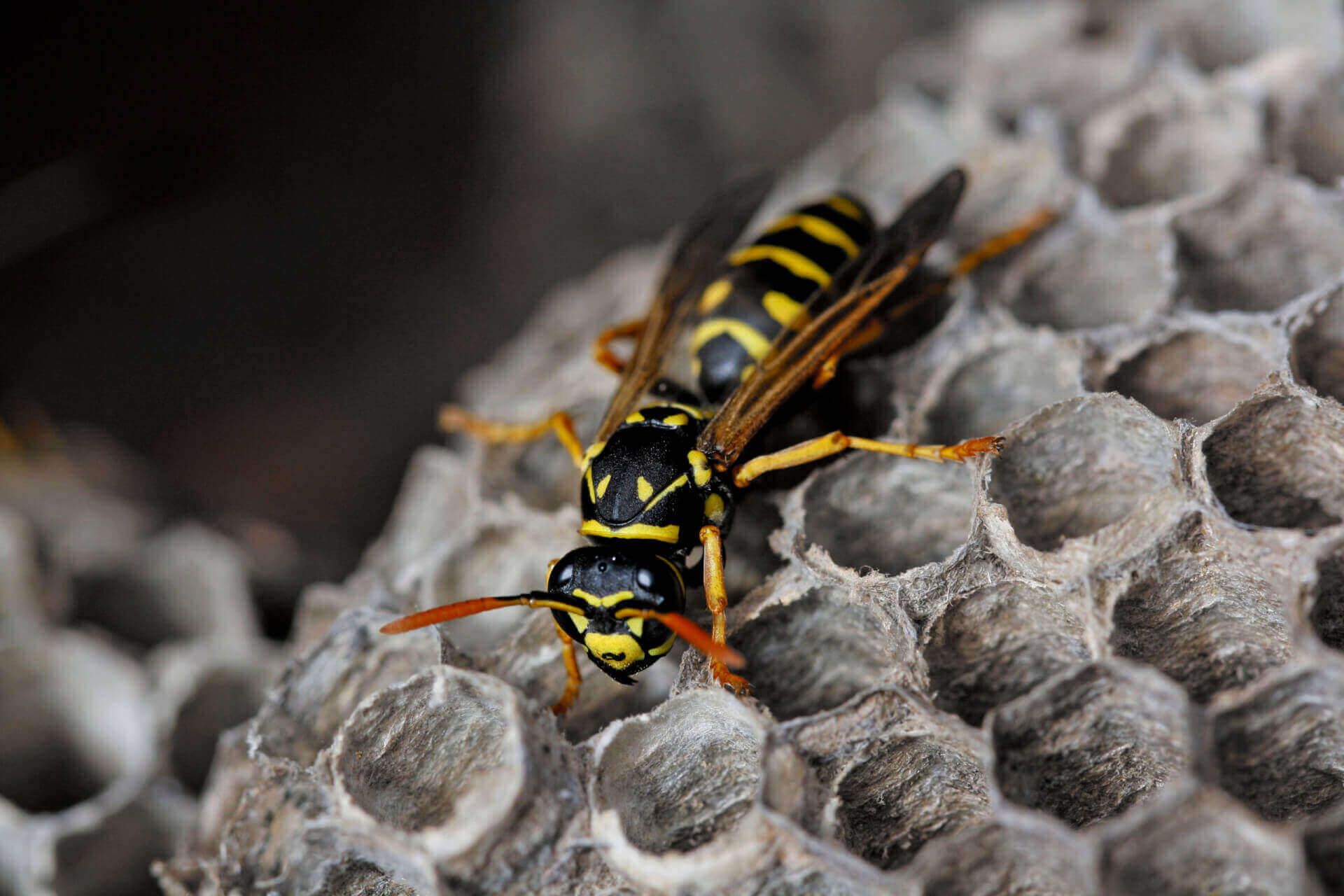
Yellowjackets are commonly black and yellow or black and white and can become a significant nuisance around outdoor food, garbage, and sugary drinks, particularly later in the season. Depending on the species, nests may be underground, inside wall voids, or above ground in protected locations.
Yellowjackets generally become more defensive when their nest is disturbed. A foraging yellowjacket away from its nest is not necessarily aggressive, but workers can sting when trapped, crushed, or threatened.
Paper Wasps
Paper wasps are generally slender and build open, umbrella-shaped nests with visible combs. Common nesting sites include eaves, porch ceilings, railings, fences, branches, and other sheltered structures.
Paper wasps are generally less defensive than yellowjackets when left alone, but they can still sting when the nest is disturbed or located in a high-traffic area.
European Hornets
European hornets are larger social wasps that may nest in wall voids, tree cavities, and other protected spaces. Their larger size does not automatically make their sting more dangerous than every other wasp sting, but a colony defending its nest can present a significant stinging risk.
The important distinction is not simply size. Nest location, colony size, accessibility, and defensive behavior all affect the risk of treatment.
Wasp Identification at a Glance
The following comparison can help distinguish common social wasps before treatment is considered:
| Wasp Type | Typical Appearance | Common Nest Type | Common Nest Locations | Key Behavior |
|---|---|---|---|---|
| Yellowjackets | Black and yellow or black and white | Enclosed paper nest | Ground, wall voids, structures, trees | Can become highly defensive near the nest |
| Paper Wasps | Slender body, often brown, red, black, or yellow | Open paper comb | Eaves, porches, fences, branches | Usually less defensive unless disturbed |
| European Hornets | Large social wasp with brown and yellow markings | Enclosed paper nest | Tree cavities, wall voids, protected structures | Can defend the colony when disturbed |
Original visual recommendation: Use an original Domination Extermination photo or technician-created graphic showing these three nest types side by side.
Where Wasp Nests Are Commonly Found
Wasp nests around South Jersey properties are commonly found in sheltered locations above ground, inside structures, in trees, or underground. The exact nesting site depends on the species and available shelter.
Wasp nests are made from paper-like material created when social wasps chew wood fibers and combine them with saliva. Common nesting locations include:
- Soffits and roof overhangs
- Porch ceilings and eaves
- Garage rafters
- Sheds and outbuildings
- Tree branches and cavities
- Wall voids
- Ground-level burrows or abandoned rodent holes
- Other protected structural cavities
A visible nest is not always the source of the problem. Wasps may forage around food, water, flowers, garbage, or other resources while the actual colony is located somewhere else. When inspecting for wasp activity:
- Observe from approximately 10 to 15 feet away rather than approaching an active nest.
- Look for repeated flight paths between the insects and a specific opening or structure.
- Watch for steady traffic through small openings, which may indicate a concealed nest inside a wall, soffit, tree cavity, or other protected space.
- Do not block an active entrance before the colony has been controlled, as this can force wasps into other areas of a building.
When to Inspect for Wasp Nests
Regular inspections from April through September can help identify new nests before colonies become larger and more difficult to manage. Social wasp colonies typically begin with an overwintered queen establishing a new nest in spring, while worker populations increase as the season progresses.
A practical inspection schedule includes:
- Inspect eaves, soffits, porches, sheds, and other sheltered areas in spring.
- Check for repeated wasp activity around structural openings.
- Monitor outdoor food and garbage areas during summer.
- Reinspect high-traffic areas as the colony grows.
- Address active nests before they create a significant safety concern.
Social wasp colonies generally die off during winter, and old nests are not reused the following spring. New queens establish new colonies instead, so the seasonal lifecycle makes early detection useful. However, an active nest should not be ignored simply because the colony will eventually die off.
Can You Remove a Wasp Nest Yourself?
DIY wasp removal is best limited to small, exposed nests that can be approached safely and treated with a product specifically labeled for the target insect and application site. Penn State Extension recommends assessing nest size, location, accessibility, and defensive behavior before deciding whether homeowner treatment is appropriate.
For a small exposed nest, a homeowner may consider a ready-to-use wasp or hornet aerosol if the product label permits that application. Many commercial aerosols are designed for extended-range application, but the exact spray distance and use instructions vary by product. The product label, rather than a generic distance such as 22 feet, should determine how the treatment is applied.
If treatment is attempted, basic precautions include:
- Inspect the area during daylight and plan the treatment for a period when wasp activity is lower.
- Wear clothing that minimizes exposed skin.
- Use gloves and eye protection appropriate for the insecticide and application.
- Keep an unobstructed escape route available.
- Avoid standing directly beneath an active nest.
- Do not shine a flashlight directly into the nest entrance.
- Follow every pesticide label instruction, including required personal protective equipment.
When DIY Removal Is Not Appropriate
DIY treatment becomes significantly less suitable when the nest is large, hidden, elevated, inside a wall void, underground, near a high-traffic area, or difficult to reach safely. Professional pest control is also the better option when:
- A person on the property has a known allergy or serious sensitivity to stings.
- The nest is inside a wall, soffit, attic, or other enclosed cavity.
- The colony is large or highly defensive.
- A ladder or difficult access is required.
- The species cannot be identified confidently.
- Previous treatment did not stop the activity.
These conditions increase the consequences of a failed treatment and make professional assessment more appropriate.
Expert Insight: Why Nest Location Matters
Nest location, colony size, and defensive behavior all influence the risk of treating a wasp nest. Penn State Extension notes that eliminating a stinging insect nest can expose a person to a significant risk of being stung, making nest assessment an important part of choosing a control method.
At Domination Extermination, this same principle guides wasp control throughout South Jersey. Identifying the nest location, understanding colony behavior, and determining how accessible the nest is help establish the appropriate approach for each property.
Do Homemade Wasp Sprays Work?
A soap-and-water mixture may kill individual wasps through direct contact, but it is not a reliable treatment for an established colony. Because homemade sprays require close access to the insects, using them around an active nest can also increase sting exposure.
For an established colony, killing visible workers does not necessarily address the nest itself. The treatment needs to account for the colony and its nesting location, particularly when wasps are nesting inside walls, underground, or in other concealed areas.
If a homeowner chooses to use a commercial insecticide, the product must specifically list the target pest and intended application method on its label. Penn State Extension notes that ready-to-use aerosols, dusts, foams, and liquid products can be useful in certain situations, but no single product is appropriate for every nest type. For large, concealed, or defensive colonies, professional pest control is a more appropriate option than relying on a homemade spray.
Do Natural Wasp Repellents Work?
Natural deterrents may reduce wasp activity around selected outdoor areas, but they should not be relied on to prevent nesting or eliminate an established colony. Homeowners may encounter recommendations involving peppermint, clove, lemongrass, citronella, eucalyptus, and other essential oils, but evidence for these methods as reliable nest-prevention or colony-control treatments is limited.
More reliable prevention focuses on reducing food and water sources and limiting access to potential nesting sites. University of Maryland Extension recommends keeping outdoor food and beverages covered, using tight-fitting trash lids, cleaning up fallen fruit, and reducing other attractants that can draw foraging wasps to a property.
If an established nest is present, natural repellents do not replace identifying the nest, assessing its location, or choosing an appropriate control method. For concealed, large, or difficult-to-reach nests, professional assessment may be the safer option.
How to Prevent Wasps From Nesting
Wasp prevention combines food-source management, property maintenance, routine inspections, and early response to new nesting activity. Focus on these practical steps during the active season:
- Keep food and garbage covered. Wasps can be attracted to sugary beverages, fruit, food waste, and other accessible food sources. Keep outdoor food covered and use tightly sealed garbage containers, especially during late summer and fall.
- Clean spills quickly. Sweet drinks, food residue, and fallen fruit can attract foraging wasps. Cleaning these sources promptly reduces unnecessary activity around patios, decks, and outdoor dining areas.
- Inspect sheltered nesting sites. Check soffits, eaves, porch ceilings, sheds, garages, and other protected areas during the active season.
- Maintain screens and building openings. Repair damaged window and door screens and address accessible structural openings that can provide entry points into protected cavities.
- Do not block an active nest entrance. If wasps are entering a wall or structural cavity, sealing the visible opening before the colony is controlled can redirect insects into the building.
- Remove abandoned indoor nest material when appropriate. Old nests inside wall voids may warrant removal after treatment because remaining organic material can attract other pests. Old nests in natural outdoor locations generally do not need to be removed.
Do Wasp Traps Eliminate Nests?
Wasp traps can reduce the number of foraging workers around an outdoor area, but they do not eliminate an established colony or remove the nest. They may be useful when yellowjackets are creating a nuisance around patios, outdoor dining areas, or other spaces where workers are actively foraging.
Penn State Extension notes that yellowjacket traps can reduce foraging worker numbers to some degree, but they are unlikely to solve an established colony problem. Placement also matters, so a trap should not be used as a substitute for locating the nest when wasp activity remains persistent.
If wasps continue appearing around the same area despite trapping, the colony may still be active nearby. In that situation, identifying the source of the activity is more important than simply reducing the number of visible workers.
When Should You Call Professional Pest Control?
Professional pest control is recommended when a wasp nest is large, concealed, difficult to access, located inside a structure, or associated with a known sting allergy.
A professional assessment can determine:
- What type of stinging insect is present
- Where the colony is nesting
- How accessible the nest is
- Whether the colony is inside a wall or other cavity
- What treatment method is appropriate
- Whether follow-up treatment or exclusion work is necessary
Penn State Extension recommends professional help when a nest is difficult to reach or when a homeowner is uncomfortable treating it, while University of Maryland Extension specifically identifies allergies and difficult access as reasons to use a pest control professional.
In South Jersey, active nests may appear around Mantua, Sewell, Sicklerville, Washington Township, Glassboro, Pitman, and surrounding communities. Properties may have different nesting conditions depending on whether the colony is located around a porch, roofline, shed, tree, ground burrow, or structural cavity.
Domination Extermination provides residential and commercial pest control throughout South Jersey, including
wasp removal for properties where nest location, accessibility, or colony activity makes DIY treatment impractical.
How Wasp Behavior Changes Through the Season
Wasp activity changes as colonies develop, so foraging activity and nest defense can become more noticeable as the season progresses. In spring, an overwintered queen establishes a new colony and begins raising workers. As the workers mature, they take over nest-building, food collection, and colony defense.
Later in the season, larger colonies can produce more noticeable activity around food, garbage, fruit, and outdoor gatherings. Yellowjackets can be particularly troublesome around picnics and barbecues in late summer and fall, when their foraging activity becomes more apparent.
By late autumn and winter, social wasp colonies die off, while new queens survive the winter and establish new colonies the following spring. Old social wasp nests are not reused, which means a small nest discovered in spring can develop into a much larger management concern as the colony grows.
Social vs. Solitary Wasps
Social wasps live in colonies and defend shared nests, while solitary wasps generally nest alone. Social species include yellowjackets, paper wasps, and hornets, whose workers collectively defend the colony and can respond defensively when the nest is disturbed.
Solitary wasps do not maintain the same type of cooperative colony. Many build individual nests and provision them with prey for their young, so they generally do not defend a shared colony in the same way social wasps do. As a result, their behavior can be substantially less defensive than that of social wasps.
This distinction can help when evaluating wasp activity around a property. A single wasp foraging around flowers is not necessarily evidence of a nearby colony, while repeated traffic through the same opening can indicate an active nest.
What to Do After a Wasp Sting
After a wasp sting, move away from the nest or active area first, then wash the affected skin with soap and water and monitor for symptoms. Wasps can sting repeatedly, so leaving the immediate area is especially important when the sting occurs near an active nest. Localized pain, itching, and swelling can persist for several days.
Seek immediate medical attention if you experience any of the following:
- Difficulty breathing or swallowing
- Severe or rapidly increasing swelling
- Dizziness or other signs of a serious reaction
- Significant swelling around the eyes, nose, mouth, or throat
- Symptoms that spread well beyond the immediate sting site
Anyone with a known serious allergy to bee or wasp stings should not attempt DIY nest removal. An active nest can expose a person to repeated stings, making professional pest control a safer option.
Frequently Asked Questions About Wasp Control
How do I know if I have a wasp nest or a bee nest?
Wasp nests are commonly made from paper-like material, while honey bee colonies produce wax comb and bees generally have hairier bodies. Wasp nests may appear under eaves, inside cavities, in trees, or underground depending on the species. Accurate identification matters because bees and wasps require different management approaches.
What is the best time of day to remove a wasp nest?
Evening or nighttime treatment can reduce wasp activity because many colony members are less active and have more difficulty seeing in low light. Penn State Extension recommends observing the nest during daylight and planning treatment for nighttime while maintaining an escape route and avoiding the insects' normal flight path.
Are hornets more dangerous than wasps?
Hornets are wasps, and the risk of a nest depends more on species, colony size, nest location, and defensive behavior than on size alone. Some social wasps can defend their nests aggressively, particularly when the colony is disturbed. Treatment should therefore focus on the specific insect and nest conditions rather than assuming that every hornet is inherently more dangerous.
Can I use a homemade spray on a wasp nest?
A soap-and-water mixture may kill individual wasps through direct contact, but it is not a reliable solution for an established nest. Close-range application can also increase sting exposure. For active colonies, especially those located inside walls, underground, or in difficult-to-reach areas, a properly labeled treatment or professional pest control is more appropriate.
How can I keep wasps from coming back?
Wasp prevention works best when food sources are controlled, trash remains sealed, nesting areas are inspected regularly, and structural entry points are maintained. Outdoor food and beverages should remain covered, spills should be cleaned promptly, and high-traffic areas should be monitored during the active season.
When should I call an exterminator for wasps?
Professional pest control is appropriate when a nest is large, hidden, difficult to reach, located inside a wall or other cavity, or associated with a known sting allergy. Professional assessment is also useful when the species cannot be identified confidently, or previous DIY treatment has not stopped the activity.
About the Author
Written by Domenic Anastasia, Founder and Lead Technician at Domination Extermination. With more than a decade of hands-on pest control experience across South Jersey, Domenic brings practical field knowledge of wasp behavior, nest identification, removal, and prevention to this guide.
Last updated: August 2026